
Begin forwarded message:
On Tuesday, October 27, 2026, 1:00 pm, Live Science <livescience@smartbrief.com> wrote:
Live Science 
Created for zvagoman@yahoo.com | Web Version
October 27, 2026 FOLLOW US
Amazing science every day SIGN UP ⋅ WEBSITE
Top Science News
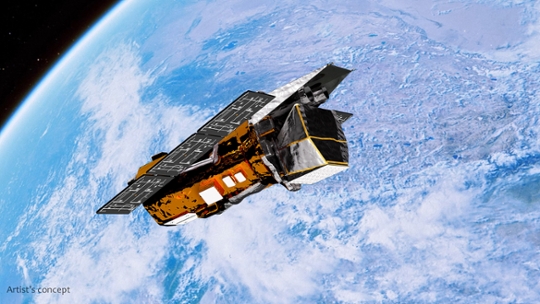
NASA's Swift observatory ends 22-year mission to study the most powerful explosions since the Big Bang NASA's Neil Gehrels Swift Observatory has officially ended its mission after more than 20 years, as it approaches a fiery reentry through Earth's atmosphere.
Read more
Live Science Pro
This psychologist has a new theory for why orcas keep attacking boats INTERVIEW | Live Science spoke with comparative psychologist Christian Frings to discuss a new theory for why orcas are attacking yachts.
Read more
Analysis
Colorectal cancer cases in kids have risen sixfold over past 2 decades — researchers are racing to understand why While rare, colorectal cancer is becoming more common in kids, teens and young adults, and the disease appears particularly aggressive in this age group.
Read more
Question of the Day
What is the name of the pre-Inca culture that lived on the northern coast of what is now Peru?
Moche
Muisca
Cañari
Tairona
Climate Change
'A potential glimpse into the future': Climate change has triggered 'permafrost landslides' with house-size blocks of ice in Canada For the first time, researchers have identified a new type of landslide of permafrost in Canada's Northwest Territories.
Read more
Physics & Math
A neglected particle from the dawn of time could explain why everything in the universe exists A hypothetical particle could have briefly held more energy than everything else in the infant universe combined, which could help explain how matter won out over antimatter.
Read more
Life's Little Mysteries
What happened when humans encountered Gigantopithecus? Gigantopithecus was the largest primate that ever lived. What would have happened when human ancestors encountered it?
Read more
Quizzes and Games
Chain Word: Solve our science word of the day puzzle You have six chances to guess our five letter word of the day. Can you figure it out and top the leaderboard?
Play now
Live Science crossword puzzle #67: Elephant-like creatures that went extinct around 10,000 years ago — 3 down Test your knowledge on all things science with our weekly, free crossword puzzle!
Play now
Daily sudoku: Take a break with this classic numbers puzzle Get a new challenge every day with our free online sudoku puzzles.
Play now
Editor's Note
Follow Live Science on social media Want more science news? Follow our Live Science WhatsApp Channel for the latest discoveries as they happen. It's the best way to get our expert reporting on the go, but if you don't use WhatsApp, we're also on Apple News, Facebook, X (formerly Twitter), Flipboard, Instagram, TikTok, Bluesky, Reddit and LinkedIn.
Find out more
Feed your curiosity: Get more newsletters from Live Science and our partners for the latest discoveries, mind-bending mysteries and expert insight.
Sign Up
Follow LiveScience
Contact Us: Feedback | Advertise Sign Up | Update Profile | Unsubscribe Privacy Policy | Cookies Policy | Terms and Conditions
When you purchase through links in our content, we may earn an affiliate commission.
Future US LLC ©Full 7th Floor, 130 West 42nd Street, New York, NY, 10036















No comments:
Post a Comment