Saturday, 11 July 2026

Fw: Time emerges inside a mini-universe, scientists thicken Arctic ice, and one of the oldest graves of a free Black person in the US found


Keep’emPeeled @ http://www.astronutter.com 


Begin forwarded message:

On Saturday, July 11, 2026, 12:16 pm, Live Science <livescience@smartbrief.com> wrote:

Live Science
Our weekly roundup of the latest science in the news, as well as a few fascinating articles.
Created for zvagoman@yahoo.com | Web Version
 
July 11, 2026
CONNECT WITH LIVESCIENCE  X Facebook YouTube Instagram
 
LiveScienceSR
SIGN UP ⋅   SHARE
 
Science news this week
 
Science news this week
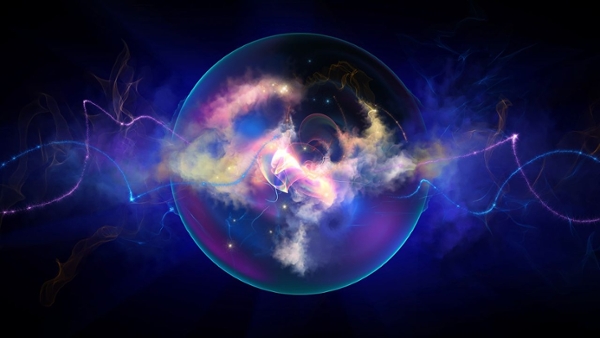
This week's science news was filled with big discoveries from the world of the small, led by a physicist's creation of a mini-universe, which was designed so we can watch time emerge from within an isolated quantum system.

The experiment was performed using a Bose-Einstein condensate — a strange state of matter that consists of thousands of atoms blended into a single quantum object at near absolute zero (minus 273.15 degrees Celsius, or minus 459.67 degrees Fahrenheit). The system showed time speeding up, slowing down and even stopping, depending on what the system was doing. 

Those weren't the only highbrow high jinks using a Bose-Einstein condensate we reported on this week. We also covered NASA's upgrade to its mini-fridge-sized laboratory on the International Space Station that will use the bizarre state of matter to probe the quantum world. Back on Earth, physicists also found that complex numbers aren't necessary for quantum mechanics to work and used quantum computers to create a rare material critical to nuclear fusion. And to stick with news from the small (and weird) things of the world, we also reported that scientists have created little diving suits to transform cockroaches into search-and-rescue cyborgs


Fresh findings
 
First experiment to thicken Arctic ice with seawater shows promise — but there's a big catch
Live Science
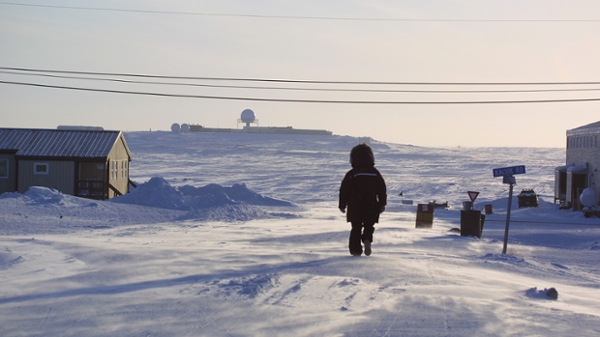
The Arctic is the world's fastest-warming region, where sea ice is rapidly disappearing at a rate of 12.2% per decade.

The ice is crucial for maintaining stable sea levels and marine nutrient flows, and for reflecting solar radiation away from our planet, so its precipitous decline is deeply concerning. That's why one team of researchers turned to a surprisingly simple method to stem the ice loss: flooding ice sheets with seawater to thicken them.

The results, despite some major caveats, showed a lot of promise.

Discover more planet Earth news


Read more


Life's Little Mysteries
 
Does fast charging damage your battery more than regular charging?
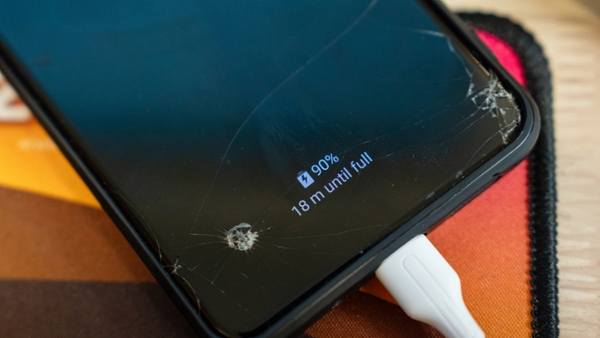
If you're as shamefully attached to your devices as I am, you may have wondered about the wildly differing times it can take for them to charge. So what's the science behind fast charging, and does it damage a device's battery more than regular charging does?


Read more


Latest research
 
'One of the oldest gravestones of a free Black person in America' discovered in Boston
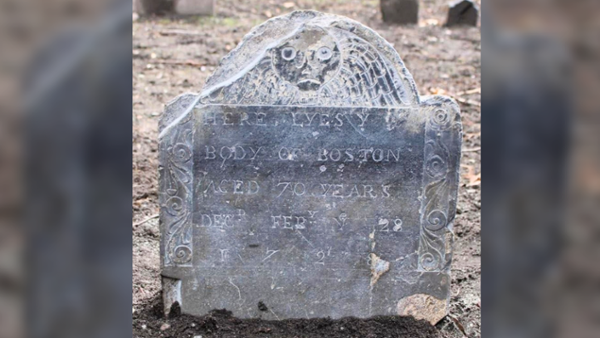
It was found amid photos of headstones during a restoration project at Boston's Granary Burying Ground — a gravestone with only one name, "Boston." 

That's how a team of conservationists chanced upon the tombstone of Sebastian, a formerly enslaved man who died free in 1729 and chose the city's name as his own. 

A search through the historical archives has produced a wealth of information about Boston's past, including his reputation as a hardworking handyman throughout the city, and his emancipation following the death of the man who held him in slavery.

"It's been there all along. We just had to go look and share the story," Michelle Wu, the mayor of Boston, said in a July 4 speech. 

Discover more archaeology news


Read more


Also in the news this week
 
 
New sodium metal battery design charges in just 4 minutes and retains its capacity for years
Live Science (7/10)
 
 
Dirty 'button' unearthed by metal detectorist turns out to be a rare 900-year-old coin from Norway's last Viking king, Magnus Barefoot
 
 
'Astronomers have to revise estimates': The Milky Way may be larger, heavier and more lopsided than we realized
 
 
2,500-year-old tomb of a 'warrior prince' with chariot and helmet discovered on Italy's Adriatic coast
 
 
Malaria had nearly been eliminated around a giant dam in the Amazon — but then it came roaring back. Experts just discovered why.


Beyond the headlines
 
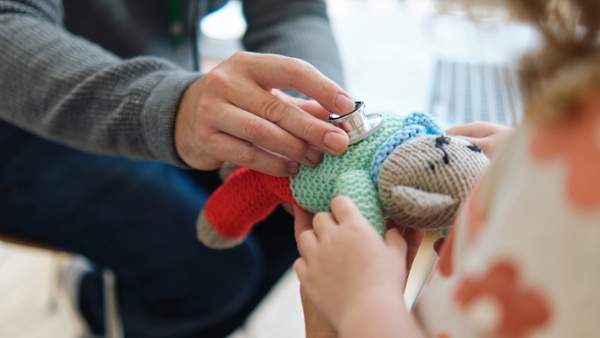
'800 seconds for a sick visit': Some factors driving antibiotic resistance have nothing to do with biology, says medical sociologist Julia Szymczak
Live Science
Antibiotic resistance continues to pose a growing danger across the U.S., with more than 2.8 million antimicrobial-resistant infections occurring in the country each year. Last week, we brought you a report from Live Science health editor Nicoletta Lanese, who visited Japan to investigate how that country is curbing its overuse of antibiotics.

Now, in the second part of a feature series into the fight against this "silent pandemic," Nicoletta interviewed medical sociologist Julia Szymczak to dig into the social and emotional drivers of antibiotic overprescription.
 
 
Read more


Something for the weekend
 
If you're looking for things to keep you busy over the weekend, here's a selection from our best opinion pieces, interviews, diagnostic dilemmas and crosswords that we published this week.


Photo of the week
 
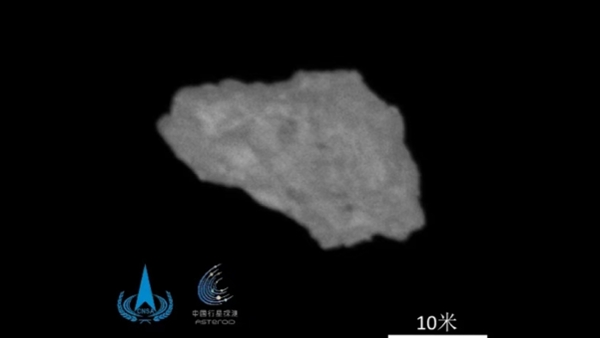
Secretive Chinese probe snaps first photo of Earth's mysterious 'quasi-moon' — and it may pose a big problem
Live Science
It doesn't look like much, but this blurry, gray image is the first-ever close-up photo of one of Earth's temporary "quasi-moons" — a fast-spinning asteroid temporarily orbiting the sun in sync with our planet.

Of equal intrigue is the spacecraft that took the image: a secretive Chinese probe that is likely gearing up to land on the space rock and snag a sample ‪—‬ although an unexpected hiccup will make that more difficult.
 
 
Find out more


This week's newsletter was written by Ben Turner
 
This week's newsletter was written by Ben Turner
Ben Turner is a U.K. based staff writer at Live Science. He covers physics and astronomy, among other topics like tech and climate change. He graduated from University College London with a degree in particle physics before training as a journalist. When he's not writing, Ben enjoys reading literature, playing the guitar and embarrassing himself with chess.


Follow Live Science on social media
 
Want more science news? Follow our Live Science WhatsApp Channel for the latest discoveries as they happen. It's the best way to get our expert reporting on the go, but if you don't use WhatsApp, we're also on Facebook, X (formerly Twitter), Flipboard, Instagram, TikTok, Bluesky and LinkedIn.
 
 
Future Follow LiveScience X Facebook YouTube Instagram
Contact Us: Feedback | Advertise
Sign Up | Update Profile | Unsubscribe
Privacy Policy | Cookies Policy | Terms and Conditions
When you purchase through links in our content, we may earn an affiliate commission.
 
Future US LLC ©
Full 7th Floor, 130 West 42nd Street, New York, NY, 10036

No comments:

Post a Comment