
From: Skeptoid Companion Email <noreply@skeptoid.com>
Date: Tue, 20 Jan 2026 at 16:15
Subject: Skeptoid: The Van Meter Visitors
To: <zvagoman@gmail.com>
 | |||
The weekly companion email provided with each new episode of the Skeptoid podcast | |||
 | |||
Skeptoid #1024: THE VAN METER VISITORS Since 2013, the small town of Van Meter Iowa has become closely associated with a pair of monsters ripped right out of the headlines of 1903 newspapers. But except for a 1950s mention in Fate Magazine, and a 2009 article in Fortean Times, there had been little notice of the story since its original appearance in the newspapers of the early 20th century in middle America. In this episode we're going to look at the birth and evolution of a monster and how such creatures can spring back to life after long periods of dormancy. by Blake Smith  | |||
| |||
WONDER OF THE WEEK Mapping the genetic landscape across 14 psychiatric disorders 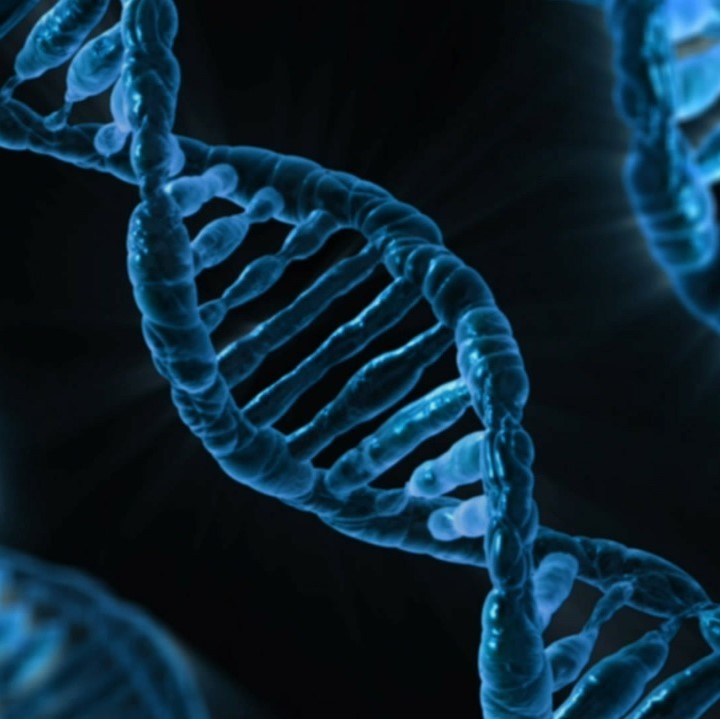 Depiction of DNA As the saying goes, all taxonomies are false but some are useful. A difficult taxonomic challenge in psychiatry is sorting out and diagnosing various disorders. This has had to be done by observing symptoms and behaviors, much the way a taxonomist might look at the physical structures of animals to sort them into categories. The DSM (Diagnostic and Statistical Manual of Mental Disorders) represents the current consensus on classifying mental disorders. Genetic analysis revolutionized taxonomy for organisms, allowing precision previously thought impossible. Now it's possible that the third study by the Psychiatric Genomics Consortium Cross-Disorder working group will help bring that kind of clarity to psychiatry. The study, far and away the largest of its kind, analyzed the gene variants in more than a million people who have been diagnosed with neurodivergencies and mental health conditions. The researchers found that 14 conditions typically thought of as distinct actually fall into five underlying genetic buckets. They also found that, in contrast, relatively few variants were linked to a higher risk of just a single condition. There was an especially high overlap between schizophrenia and bipolar disorder, with major depression, PTSD, and anxiety also grouping together. ADHD was grouped with autism, while OCD, anorexia nervosa, and Tourette's tended to group together. The last bucket was substance use disorders and nicotine dependence. Biologists hunting for genetic variants associated with a higher chance of developing psychiatric conditions have expected to find distinct variants for each. Instead they found quite a bit of overlap, with some suggesting that all such conditions have a single underlying cause that they called the p-factor. This new research suggests that the reality is somewhere between those extremes. This is encouraging news for patients who have received multiple diagnoses. Lead author Andrew Grotzinger, of the University of Colorado Boulder, explains that while some people can feel like they have a lot wrong with them it may be that they have just one root cause. "For the millions of people out there who are being diagnosed with multiple psychiatric conditions, this indicates that they don't have multiple distinct things going on. I think it makes a big difference for a patient to hear that." Grotzinger further explains that clinicians, who tend to think that there is a single "correct" diagnosis for each person, may be treating their diagnostic manuals "like religious texts". The degree of genetic overlap uncovered in this new study suggests that often there is no single correct diagnosis. The results also open the door to better treatments. Grotzinger cautions that we still don't know enough about the effects of these gene variants to start applying these findings. For example, screening embryos during IVF would raise serious ethical questions. He says, "We're starting to get there, but we don't know exactly what these genes do. It's not that I think embryo screening is wrong; it's bad scientifically." Still, the findings could eventually help bring precision to clinicians and hope to patients. Contributed by Craig Good. | |||
SKEPTOID COMING TO YOU... January 20, 2026 - Bend, OR February 13, 2026 - Lincoln, NE February 17, 2026 - Bend, OR I would love to come visit your group too — click here to make it happen! | |||
PLEASE DONATE TO SUPPORT SKEPTOID! People need reliable information they can count on. And at Skeptoid Media, Reliability Matters. We provide thoughtful analysis and empower our listeners to make solid decisions based on facts, not fiction, and science without sensationalism. How Can You Help? Your donations make Skeptoid Media possible! As a 501(c)(3) nonprofit, we are mission driven, not profit driven. And our organizational values underscore everything we do:
Our success -- even our very existence -- relies on your generosity. As you listen to the Skeptoid podcast and our other programming, remember that by contributing to Skeptoid Media, you truly make a difference in the world. And when you donate, you are rewarded with a premium membership! Premium members have access to the ad-free premium extended version of the show, plus we'll also thank you with a free gift, and more. Become a member today and help support reliable information and critical thinking skills across the globe, brought to you by one of your favorite, hardworking educational nonprofits. Thank you for helping Skeptoid Media thrive! | |||
100 EPISODES AGO
| |||
200 EPISODES AGO
| |||
300 EPISODES AGO
| |||
400 EPISODES AGO
| |||
500 EPISODES AGO
| |||
This email is a weekly companion to the Skeptoid Podcast. Or visit your Members Portal to manage your account and email settings
|





 © Skeptoid Media, Inc.

No comments:
Post a Comment