| | One story has topped the science news this week: the fortunes of Comet 3I/ATLAS as it made its way around the sun.
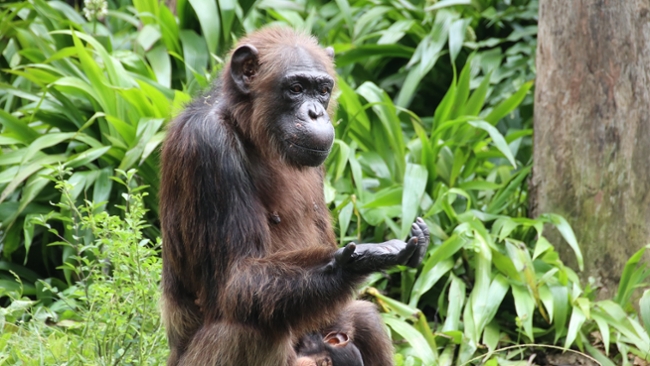
While numerous conspiracy theories have tailed the comet, suggesting that it's actually some sort of alien probe rather than a traveling snowball, what we do know for certain is that once it reemerged from the other side of our star, it had taken on a bluish hue. This is the third time experts have seen it change color since it was discovered and was likely caused by a gas, such as carbon monoxide or ammonia, leaking from it — although this is as yet unconfirmed. But 3I/ATLAS isn't the only color-changing comet in our solar system. Also discovered by the same ground-based telescope, Comet C/2025 K1 (ATLAS), which is perhaps unfairly more commonly known as the "other ATLAS," took a dangerous pass around the sun on Oct. 8 that it was not expected to survive. But survive it did, and its perilous close pass caused it to heat up and glow with a beautiful golden color rarely seen in comets. | | | It's not just humans that have learned to apply the "scientific method" when it comes to making decisions — chimpanzees (Pan troglodytes) can also, to an extent, discard their prior beliefs if some more convincing evidence comes along.
New research shows that chimps use metacognition, or thinking about thinking, to weigh evidence and plan accordingly. To test this, scientists created experiments in which they gave chimps sets of boxes, some of which contained tasty treats, along with different clues hinting at which box had the treat.
Crucially, when the chimps faced contradictory information, they were able to reassess what they had seen earlier and change their mind on where the food might be. This sort of reasoning means the chimpanzees passed what one scientist called the "high bar" of rationality. Discover more animals news: | | | Earth's growing space junk problem became extremely apparent this week after a return capsule containing three Chinese astronauts — Wang Jie, Chen Zhongrui and Chen Don — was struck by an errant chunk of debris, forcing the trio to return to the Tiangong space station. Officials from the China Manned Space Agency are currently investigating exactly what happened and how much damage the debris caused. If the spacecraft is deemed to be too dangerous to fly, it will be ejected into space and the crew will instead return aboard the next return module.
What is clear, at least at the time of writing, is that the three astronauts, aboard the station since April 24, will have to postpone their trip home for a little while longer.
Discover more space news: | | | | Also in the news this week | | | Climate scientists are warning that global warming could trigger a cascade of "tipping points" that threaten to plunge our planet into chaos. But what exactly are tipping points, what happens if we cross them, and how can we avoid them? Staff writer Patrick Pester investigated. | | | | Something for the weekend | If you're looking for something a little longer to read over the weekend, here are some of the best polls, interviews and opinion pieces published this week. | | | 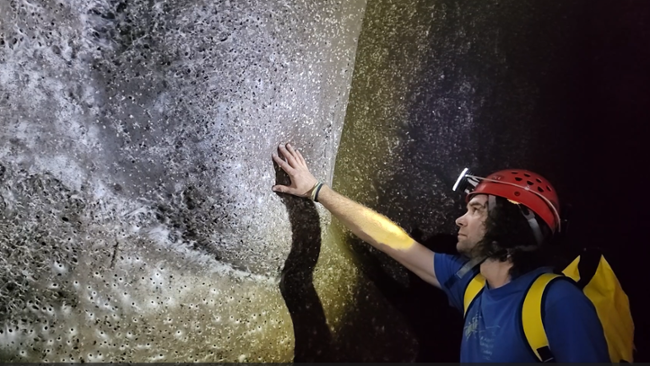 | If a trip deep into the pitch-black "Sulfur Cave" on the Albanian-Greek border didn't already sound spooky enough, wait until you see what's lurking down there — a spider megacity.
According to a recent study, the cave hosts what scientists believe is the world's biggest spiderweb, home to 111,000 spiders of two different species thriving in a permanently dark zone of the cavern. The web stretches 1,140 square feet (106 square meters) along a narrow passage near the cave's entrance and is a patchwork of thousands of individual, funnel-shaped webs.
This is the first evidence of colonial behavior in two common spider species, the barn funnel weaver Tegenaria domestica and the sheet weaver Prinerigone vagans. But what makes this even more unusual is that, in the outside world, barn funnel weavers typically dine upon P. vagans. Nonetheless, the two live side by side in the cave's murky depths eating non-biting midges, which in turn survive on slimy secretions that protect sulfur-oxidizing bacteria in the cave.
It all sounds very delicious (if you're a spider). One thing that's less appealing for the average human is this video of one of the researchers prodding the massive web — you have been warned. | | | | Alexander is the Editor-in-Chief at Live Science, and has more than 15 years' experience in publishing at digital titles. In 2024 he was shortlisted for Editor of the Year at the Association of British Science Writers awards for his work at Live Science. He has previously worked at New Scientist and BBC Science Focus. | | | | Follow Live Science on social media | | | | | | | | |








No comments:
Post a Comment