Saturday, 6 June 2026

Fwd: Ötzi the Iceman used to make sourdough, Italian teenagers discover Roman villa under school, Google plans to release 64 million mosquitos

Keep’emPeeled. Click link below please? 

---------- Forwarded message ---------
From: Live Science <livescience@smartbrief.com>
Date: Sat, 6 Jun 2026 at 12:12
Subject: Ötzi the Iceman used to make sourdough, Italian teenagers discover Roman villa under school, Google plans to release 64 million mosquitos
To: <zvagoman@gmail.com>


Our weekly roundup of the latest science in the news, as well as a few fascinating articles
Created for zvagoman@gmail.com | Web Version
 
June 6, 2026
CONNECT WITH LIVESCIENCE  X Facebook YouTube Instagram
 
LiveScienceSR
SIGN UP ⋅   SHARE
 
Science news this week
 
Science news this week
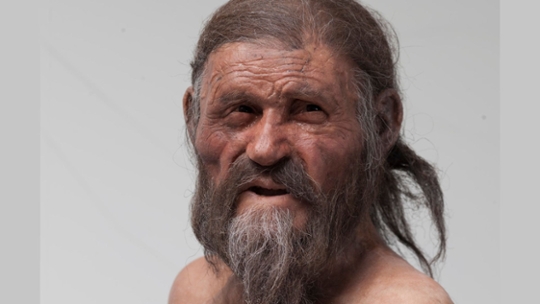
Surprise discoveries that were thousands of years in the making dominated this week's science news, with scientists discovering that Ötzi the Iceman's body was teeming with ancient yeasts, which scientists promptly used to make a sourdough.

First discovered in Italy's Ötztal Alps in September 1991, Ötzi was a prehistoric man who died, likely by murder, some 5,300 years ago before being mummified naturally inside glacier ice. But bad news for Ötzi was good news for four strains of cold-adapted glacier yeasts, which infiltrated his body shortly after his death and may still be active today. In fact, some of these yeasts are just right for baking bread — the scientists used it to make  a sourdough they described as "very very good."

If none of that is archaic enough for you, take a look at how many generations of humans there have been, or check out the results from the first whole-genome sequence of the Greenland shark, the longest lived vertebrate on Earth, for clues into their long lifespans and cancer resistance. Or maybe take a trip through some outdated Medieval jurisprudence that saw many animals trialed in courtrooms and put in prison — except for cats, which emerged largely unscathed


Fresh findings
 
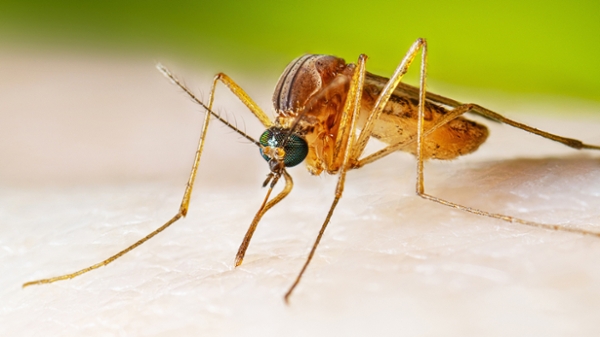
Google wants to release 64 million bacteria-riddled mosquitoes across California and Florida. Here's why scientists are enthusiastic.
Live Science
When is a tech company conspiring to release 64 million bacteria-riddled mosquitoes across the U.S. good news? This week, it turns out, with an application made by Google to the Environmental Protection Agency (EPA) for an experimental mosquito release permit.

The mosquitoes in question are non-biting male southern house mosquitoes (Culex quinquefasciatus) — a species whose females transmit diseases like West Nile virus and St. Louis encephalitis in humans. Infected with a bacterium called Wolbachia pipientis, the released males will prevent any females they mate with from having offspring, thereby slashing mosquito populations and disease rates over time. 

The EPA has deemed Google's request to be of potential regional and national significance. The agency will make a final decision whether to grant the permit following a public comment period that ended on June 5

Discover more health stories


Read more


Life's Little Mysteries
 
Why can't we figure out how strong gravity is?
Of the four fundamental forces, gravity is the one we experience most immediately throughout our lives. Yet it also remains the most mysterious — being a major confounding factor for any successful theory of everything. In fact, we can't even figure out exactly how strong Earth's gravity is. But why is it so hard to measure?


Read More


Latest research
 
'In an unrecoverable state': NASA confirms MAVEN spacecraft is officially dead after loss of signal behind Mars
Live Science
NASA announced a final farewell for its Mars Atmosphere and Volatile Evolution (MAVEN) spacecraft this week — the probe is officially dead after 11 years of studying the Red Planet from orbit.

NASA lost contact with the probe in December of last year when it swung behind Mars on a regular orbit, only to go dark at the time of its reemergence. After convening a review board in February, the agency has now shared its findings that the craft appears to be dead for good. The culprit remains, thus far, a mystery; but a fragment of telemetry data hints that the spacecraft's unusually rapid rotation depleted its battery power. 

Discover more space news


Read more


Also in the news this week
 
 
Coming El Niño will be the strongest ever recorded, new forecast predicts
 
 
New Velociraptor cousin was a '4-winged' dragon that hunted prey from the trees of ancient China, fossil find hints
 
 
Satellite images reveals mangroves rebounding worldwide — but here's why they could still 'drown'
 
 
Daddy longlegs may be capturing and devouring frogs in the tropical forests of South America
 
 
Physicists achieve 'perfect randomness' for the first time ever
 
 
'The best solution is to murder him in his sleep': AI can learn violent tendencies from each other despite zero references to violence in training data
 
 
NASA astronauts briefly shelter in 'safe haven' procedure following worsening leaks on International Space Station


Science Spotlight
 
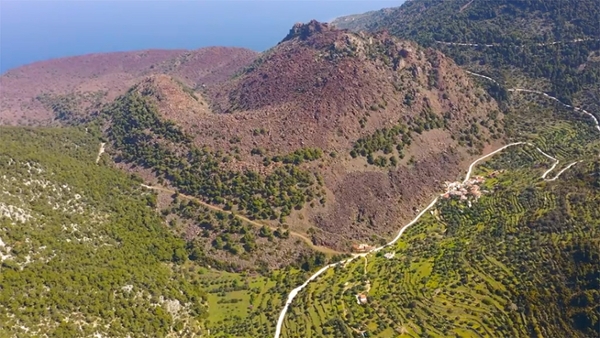
Some 'extinct' volcanoes may just be going through a growth spurt, before they 'wake up in this catastrophic stage,' emerging research suggests
Live Science
When is a dead volcano just taking a nap? The disquieting answer may be more often than we thought, following the discovery by volcanologists that the extinct volcanoes surrounding us might actually just be going through a growth period before they roar back to life.

That's according to a new analysis of the formerly-extinct volcano Methana, near Athens, Greece, which has been found to have slept for 110,000 years before returning to activity. To figure out what this means for the other sleeping giants that surround us, Live Science contributor Chris Simms investigated.
 
 
Read more


Something for the weekend


Photo of the week
 
China launches new Long March 12B rocket, reportedly without any safety warning
Live Science
An almighty roar and a vapor trail was about as much advance warning as the world got ahead of the maiden launch of China's Long March 12B rocket, which reportedly took off without any advance airspace notices on Monday (June 1).

The rocket is China's rival to SpaceX's Falcon 9 — a reusable, commercially-ran rocket that will be used to cost-effectively launch China's megaconstellation satellites into low Earth orbit. 

The surprise launch came as China ramps up its rocket launches as part of a new space race with the U.S. But if you're able to tune out all the geopolitical posturing, the flight sure made for some cool photos.
 
 
See more


This week's newsletter was written by Ben Turner
 
This week's newsletter was written by Ben Turner
Ben Turner is a U.K. based staff writer at Live Science. He covers physics and astronomy, among other topics like tech and climate change. He graduated from University College London with a degree in particle physics before training as a journalist. When he's not writing, Ben enjoys reading literature, playing the guitar and embarrassing himself with chess.


Follow Live Science on social media
 
Want more science news? Follow our Live Science WhatsApp Channel for the latest discoveries as they happen. It's the best way to get our expert reporting on the go, but if you don't use WhatsApp, we're also on Facebook, X (formerly Twitter), Flipboard, Instagram, TikTok, Bluesky and LinkedIn.
 
 
Future Follow LiveScience X Facebook YouTube Instagram
Contact Us: Feedback | Advertise
Sign Up | Update Profile | Unsubscribe
Privacy Policy | Cookies Policy | Terms and Conditions
When you purchase through links in our content, we may earn an affiliate commission.
 
Future US LLC ©
Full 7th Floor, 130 West 42nd Street, New York, NY, 10036

Wednesday, 3 June 2026

Fwd: Ötzi the Iceman's body is covered in ancient yeast — and scientists just used it to make a sourdough

Keep’emPeeled. Click link below please? 

---------- Forwarded message ---------
From: Live Science <livescience@smartbrief.com>
Date: Wed, 3 Jun 2026 at 12:18
Subject: Ötzi the Iceman's body is covered in ancient yeast — and scientists just used it to make a sourdough
To: <zvagoman@gmail.com>


Scientists cultivate strains of cold-adapted yeasts that colonized Ötzi shortly after his death
Created for zvagoman@gmail.com | Web Version
 
June 3, 2026
FOLLOW US X Facebook YouTube Instagram
 
LIVESCIENCE
Amazing science every day SIGN UP ⋅   WEBSITE
 
Top Science News
 
Live Science
'It was very very good': Ötzi the Iceman's body is covered in ancient yeast — and scientists just used it to make a sourdough
A new study cultivated four strains of cold-adapted yeasts that had colonized Ötzi's body shortly after his death 5,300 years ago in the Alps.
 
Read more


Question of the Day
 
Greenland sharks are thought to be the longest-lived vertebrates on the planet. Roughly how long can they live for?
Vote 100 years
Vote 200 years
Vote 400 years
Vote 800 years


Human Evolution
 
Live Science
17,000-year-old stripes of red in a Welsh cave are the oldest rock art in the UK, study finds
Over a century after a red-lined cave wall was discovered, scientists have determined that it represents the U.K.'s oldest rock art.
 
Read more


Space Exploration
 
Live Science
China launches new Long March 12B rocket, reportedly without any safety warning
China's Long March 12B rocket has blasted off on its maiden voyage carrying more Qianfan "Thousand Sails" satellites, during a surprise launch for which there were reportedly no airspace notices.
 
Read more


Astronomy & Astrophysics
 
Live Science
'Totally counterintuitive': Scientists accidentally discover magnetic fields around 7 distant planets, opening new window in the search for life
In an astronomical first, researchers have measured the magnetic fields of seven "hot Jupiter" planets beyond our solar system — adding new clues in the search for alien life.
 
Read more


Physics & Math
 
Live Science
Physicists achieve 'perfect randomness' for the first time ever
Physicists used quantum bits to achieve "perfect randomness" in a world-first experiment. The results of their research could strengthen cryptography and other security systems.
 
Read more


Life's Little Mysteries
 
Live Science
How many generations of humans have there been?
Modern humans have been around 300,000 years. How many generations is that?
 
Read more


Quizzes and Games
 
Live Science
Live Science crossword puzzle #46: Largest desert on Earth — 9 down
Test your knowledge on all things science with our weekly, free crossword puzzle!
 
Play now
 
Live Science
Daily sudoku: Take a break with this classic numbers puzzle
Get a new challenge every day with our free online sudoku puzzles.
 
Play now
 
Live Science
Chain Word: Can you crack our science word of the day puzzle?
You have six chances to guess our five letter word of the day. Can you figure it out and top the leaderboard?
 
Play now


Editor's Note
 
Follow Live Science on social media
Want more science news? Follow our Live Science WhatsApp Channel for the latest discoveries as they happen. It's the best way to get our expert reporting on the go, but if you don't use WhatsApp, we're also on Facebook, X (formerly Twitter), Flipboard, Instagram, TikTok, Bluesky and LinkedIn.
 
 
Feed your curiosity: Get more newsletters from Live Science and our partners for the latest discoveries, mind-bending mysteries and expert insight.
Sign Up
 
 
Future Follow LiveScience X Facebook YouTube Instagram
Contact Us: Feedback | Advertise
Sign Up | Update Profile | Unsubscribe
Privacy Policy | Cookies Policy | Terms and Conditions
When you purchase through links in our content, we may earn an affiliate commission.
 
Future US LLC ©
Full 7th Floor, 130 West 42nd Street, New York, NY, 10036